
Exceedingly, Great Quiet
Part 13: Silence as the goal and the journey

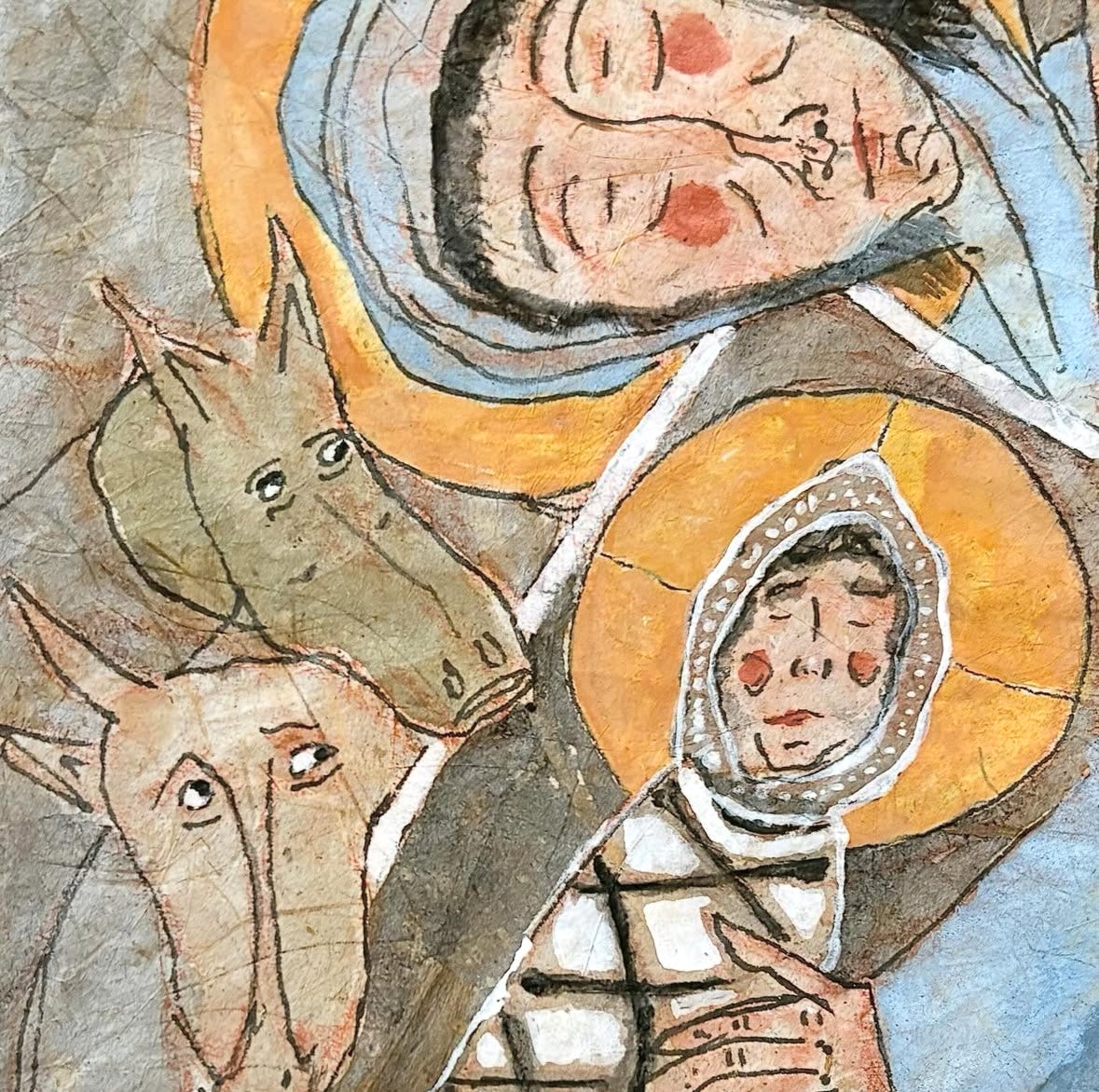
We ourselves become his echo and his answer. It is as if in creating us God asked a question, and in awakening us to contemplation he answered the question, so that the contemplative is at the same time, question and answer.
- Thomas Merton, New Seeds of Contemplation
The Rule of Life Series | Part 13
Matthew 2:10 offers us a wonderful description of the Magi’s response to the star’s settling over the location of the Christ. In a chaotic structure that I have come to love, the original Greek text describes their reaction as something along the lines of, “They rejoiced a great joy exceedingly.”1 This is form of double emphatic. These gentile pilgrims offer more joy than anyone else in the rest of the gospel does at anything else that happens. I’m sure St. Matthew means us to notice that.
Philemon of Gaza notices that this “exceedingly great joy” is in contrast to their behaviour when they finally meet the Christ-child:
“To describe their joy at seeing the child, he has no words, not one, inexpressible as the joy was.”2
The transition is stark. From overwhelming joy to silent adoration. Stark but easily missed, as silence often is. I’m not sure if I’d ever really noticed the contrast until Philemon made it explicit. Worship invites us into something, something deeper than joy which is only found in silence.
•
I am captured by the relative silence of the Magi in the story already. We don’t know enough about them to conclusively even say that they were not “three kings”. Yet their silent pilgrimage, became even more silent when they arrived at Jesus.
In the noise of my own life the idea of silence is often mechanized. I think that silence is a good “tool”. Perhaps something useful for my spiritual formation. Essentially, I can just about cope with the silent pilgrimage part of the Magi’s journey. I wonder if you resonate with that? As moderns we can cope with a whole world of things if the end result is one we want (just walk past any crossfit studio or the freezing cold startline of an ultramarathon if you don’t believe me). But the idea that the goal of a spiritual formation process might be that I can sit comfortably in silence with Jesus seems too much for most of us.
But I think that’s something the Magi model to us.
Truthfully, I don’t actually think it’s the silence that scares us. I think we actually deeply yearn for the ability to sit, quietly, rested, in the presence of Jesus. The challenge is what happens to us when we try to be silent, to rest. I think that Jared Patrick Boyd describes it well:
We want to speak with God and have God speak back to us. But what we often get when we finally carve out the space to be alone and have a little quiet is noise. It’s that inner noise of unmet expectations and failed dreams and little whispers that remind us how disappointing we are to others, or how disappointed we are in ourselves. The moments of silence are often filled with nagging questions and the natural overflow of an active mind.3
I don’t think there is a magic powder that we can take to step beyond this. The great contemplatives of the Church didn’t have powers that we don’t. Most of the writing we have on the difficulty of silence in the presence of God comes from the people we admire for their abilities as contemplatives.
We have been programmed not to do well in quiet. But I wonder if the Magi again help us. If we can remember that their pilgrimage is the result of their response to God, it might help us understand something of what happens in our silence with God.
Because we mechanize spiritual disciplines, we unintentionally assume that if we are silence then that might bring a response from God. Such as, “If I’m really quiet I’ll hear his voice.” But for the Magi their silent adoration was their response to God. God acted in Christ, their silence was their reaction.
Most of the time what I’m looking for in my spiritual devotion is an awareness of the presence of God. Sitting in silence with God is an act of faith that knows he is already there. The Magi acted in this faith. We say that they journeyed after a star, and worshiped the Messiah. But the story says that they saw a star, went to Jerusalem, nearly got everyone (including themselves) killed by Herod, then they followed the start and fell down and worshipped…a baby. They didn’t hear from God, they simply had the faith that this baby was the messiah, so in the presence of Christ, by faith, they silently adored him.
Their journey sounds a lot like ours.
What if I was to see my silent time with God not as a way to get somewhere deeper with him, but a response to him always being with me?
•
John Cassian, in a discussion about contemplative prayer offers us an image that I think is worth holding on to. Silence and adoration of God, contemplation and love for the father, can be described as the mind, “transporting and flinging itself into love for Him.”4 Cassian holds that this is where we find our deepest love of God as Father.
The Lord’s prayer speaks to this whole journey by beginning, “Our Father.” If God is our father then that means that he has always acted before us, our lives are always just response. So, like the Magi we can sit in adoration, like Paul instructs, we can cry out “Abba, Father” when we have no words.
The Magi are not always the most obvious model for spiritual formation, but their hearts align with ours. We want to meet God, see his face, be filled by him. We want our prayers to be answered, our hopes fulfilled, our fears removed. Kneeling in adoration, the Magi remind us silently that, in Christ, God has answered. Before we even asked.
So perhaps the invitation from these Three Kings, for our own spiritual formation, is to stop looking for quantifiable results, and instead just sit with Christ in whatever moments of silence we can find or preserve. Silence is not just how we get to God, it may be how we be with him too.
The Slowly Growing Rule of Life Series
1. You Already Have a Rule of Life
2. The Gospel and the Ordered Life
3. Obedience as Formation
4. Obedience as God’s Workshop
5. Ballagàrraidh and the Need for Prayer
6. Theology as Prayer
7. The Spirit and the Ordered
8. Stabilitas and Jeremiah 29:11
9. All My Troubles are Jesus’s too
10. Where What is Holy Happens
11. I’m Never Gonna Break That Vow
12. Christ in the Neighbourhood of Chaos
This is my last post of 2025. Thanks so much to all of you who have engaged over the last six months since I started posting on this site. I see the numbers of views and I’m really humbled by how many people have engaged, followed, supported, and commented. My book should be coming out early in the New Year and you’ve all helped make that a possibility.
As we end the year, if you want to jump in to a paid subscription or “buy me a book” as a one off gift, the buttons are below, thank you so very much!
ἐχάρησαν χαρὰν μεγάλην σφόδρα.
Philemon of Gaza Meditates the Gospel of Matthew, (Daniel Bourguet ed.), p.9
Jared Patrick Boyd, Finding Freedom in Constraint, p.100
John Cassian, Conferences 9:18. (Boyd’s book directed me to this piece by Cassian)
I LOVE this post. Thank you, David.
Amen!