
We Cannot Be Orphans
The Church as a people of the future

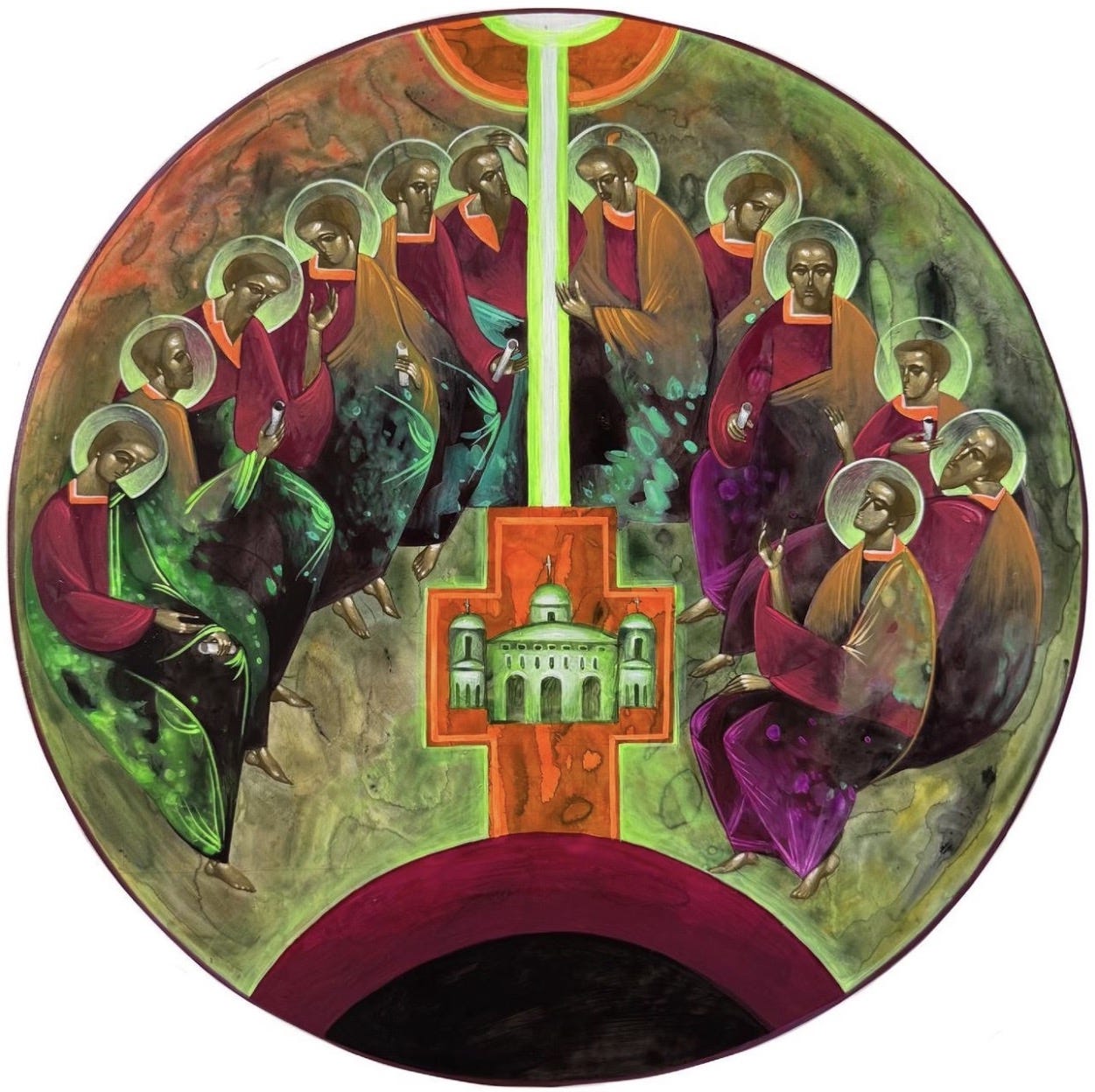
In the opening address at the Fourth Assembly of the World Council of Churches in Uppsala, 1968, Latakian Metropolitan Ignatios Hazim gave a speech containing his famous “Without the Holy Spirit” quotation.
The theme of the assembly and his speech was the line from Revelation 21:5, “Behold I am make all things new.” The Orthodox patriarch looks at the turmoil of the world around the Church and states that this phrase will ultimately be seen as the only “Event in history”.1 While everything else in history will ultimately pass away, its time complete, the breaking in of God’s “new” is eternal. He then offers this invitation to the church:
We shall not be archaeologists digging up the Christianity of the past, nor sociologists urging the Church to be revolutionary. All that belongs to the past. We shall be the prophets of Renewal, the seers of the Risen Christ.2
The newness in question is, of course, the beloved Son, the Word of God, the one the Father speaks of at his baptism and his transfiguration, Revelation’s Lamb! Because, Ignatios observes, only Christ can take the book of history (Revelation 5:7-9), Christ is the only one who brings meaning to all history — he is both the event and the meaning!
As such, and importantly for the current journey of Easter to Ascension and then Pentecost, this Event of Christ is explained in history not by the past but by the future:
It is obvious that the action of the Living God is bound to be creative. But the wonderful thing about the God who revealed himself to Abraham, Isaac and Jacob is that his creative act comes from the future. It is prophetic. This God «comes» into the world, as if to meet it. He goes before the world calling it, telling it to move along, he makes it larger and freer. 3
This perspective allows us to hear Ignatios’ famous quote more clearly. The Holy Spirit is God’s creative work in the world, the Spirit is that the presence of God with us, from the future. Thus we can hear what he means when he says:
Without him God is far away. Christ belongs to the past, and the Gospel is a dead letter, the Church is merely an organization, authority is domination, mission is propaganda, worship is an evocation, and Christian action is a slave-morality.
But in him, in an indissoluble synergy, the universe is lifted up and groans and travails to bring forth the Kingdom, man is struggling against «the flesh», the Risen Christ is here, the Gospel is a life-giving force, the Church means communion with the Trinity, authority is a liberating service, mission is like Pentecost, the liturgy is both a commemoration and an anticipation, and human action becomes more godlike.4
What’s lesser known, however, is how the Bishop concludes this idea with a “practical” moment. All of this is happening when the Church community gathers around the communion table:
The Holy Spirit brings the Parousia in a sacramental epiclesis which is mystically realistic; it creates new things, it speaks by the prophets, it concludes all things in the dialogue, it establishes communion by diffusing itself, it draws all things towards the Second Coming.5
His reference to “sacramental epiclesis” alludes to the moment when the Holy Spirit is named and welcomed during the communion prayer. The quote then reminds us that when the church is gathered together in worship leading to communion, we are both being drawn towards Christ’s second coming, and being drawn into his presence now. Not only that, but the tension of the church is not then between the physical and the spiritual but between the present and God’s future. Our worship, our communion, our hospitality are all witnesses to the future God has for the world. The Church is not a spiritual people in a physical world, we are a future people for the world.
Thanks be to God.
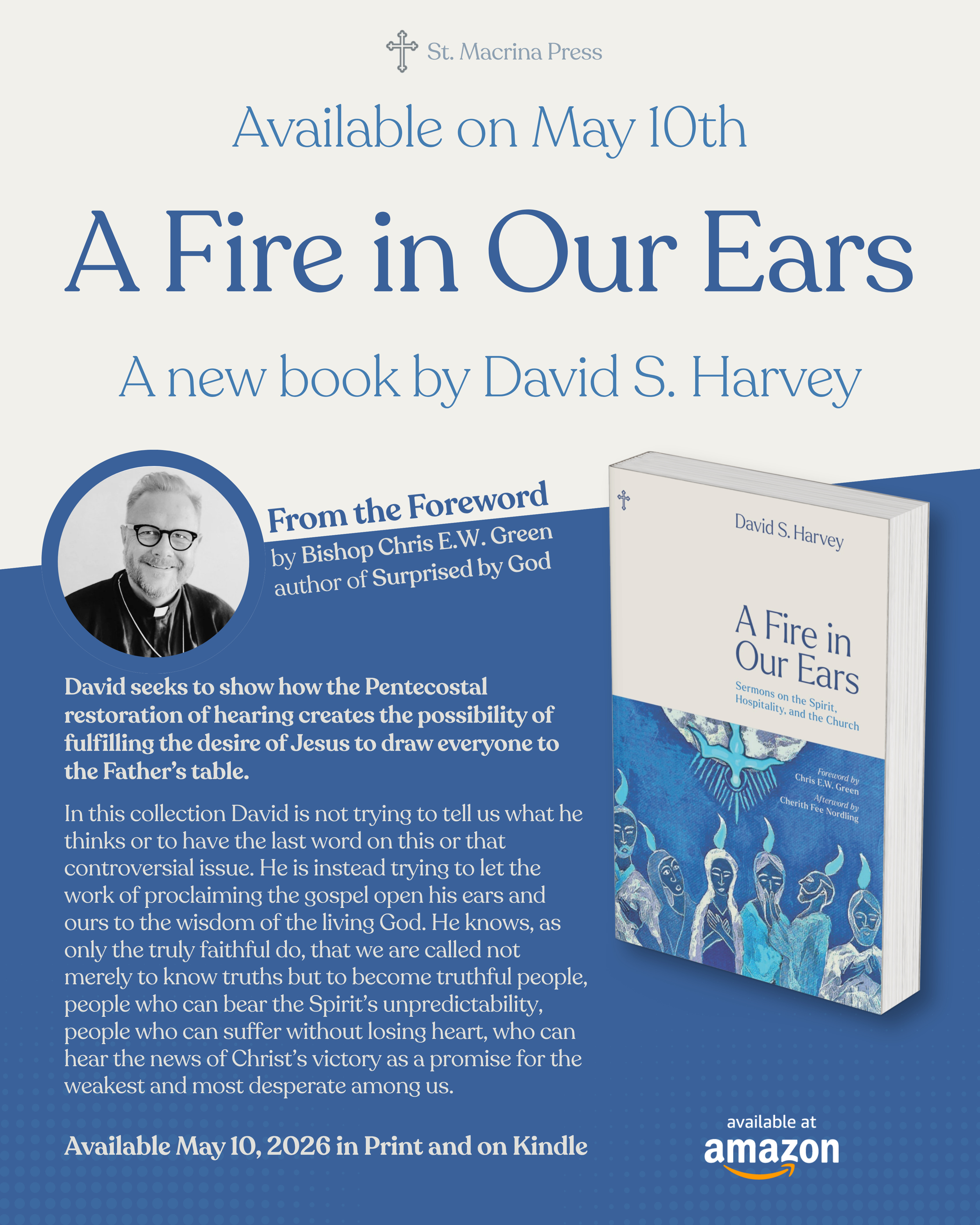
I really am excited to let you know that A Fire in Our Ears: Sermons on the Spirit, Hospitality, and the Church is now available to order from Amazon at any of their sites around the world. You will be familiar with much of the journey in the book, but I think it’s come together in a really beautiful book that will grace a coffee table well.
When you’re ready to get a copy, search it on Amazon, or use the following links:
Amazon USA: https://www.amazon.com/dp/B0GXZP42BP
Amazon Canada: https://www.amazon.ca/dp/B0GXZP42B
Amazon UK: https://www.amazon.co.uk/dp/B0GXZP42BP
The Uppsala Report 1968: Official Report of the Fourth Assembly of the World Council of Churches, Appendix 3, p.293.
ibid., p.294.
ibid., p.297.
ibid., p.298.
ibid., p.298.
I continue to struggle to communicate the importance of coming to the table each week in my Pentecostal context of ministry. If only I could spark their imaginations to embrace the work of the Spirit communicated in the sermon.