
Three Quotes for the Weekend
Rahner, Philemon and Capon on Proper 12


Thinking about the readings for Proper 12, I’m pondering these three quotes as I meditate on the texts. The Romans and the Gospel texts are worth meditating on together this week. Here’s three quotes that are directing me a little bit as I ponder. I hope you enjoy them.
•
Then suddenly, in the depths of the humble heart, the person finds, without having sought it [the verb seek doesn’t appear in the parable of the treasure!], the treasure of God revealed to him; he finds the beloved Son hidden by the Father, not a treasure of precious stones but one comparable to no other, a treasure before which the gold, incense and myrrh of the magi are nothing, a treasure that is indescribable and inexpressible, the supreme treasure above all others; he finds Jesus, the beloved Son, and he finds him after allowing himself to be led into repentance by the Holy Spirit. Then the Holy Spirit enables him to find deep in his repentant heart the Son hidden by the Father.
Philemon of Gaza Meditates Matthew’s Gospel, p.158
•
“Do you understand all this?” (Matthew 13:51)
This is Jesus’s question to his own disciples.
“Yes!” They replied
Perhaps we should translate this, “Yes!” they lied.
“Yes!” They replied hoping Jesus wouldn't ask any follow up questions.
“Uh huh”, they replied, in a tone every teacher knows well.
Their yes can only be read ironically. Gathered in the house for private parables we can see that they are not really keeping up with Jesus in these parables. Of course, we understand this. Who can really “understand all this”?
Fascinatingly, Jesus continues almost as though their “yes” really is a “yes”. What if Jesus is always behaving like this with us. What if he is unmoved by our uncertainty because, like the parables he just told, our role is a little passive. It’s all his gift.
“Okay,” he says, “you say you understand; so now I’ll tell you something: every careful listener to what I’ve been teaching you about the kingdom of heaven is like a man who is an oikodespótēs [master of the house].” …Therefore, what Jesus is saying to them seems closer to: “Once you’ve been taught about the kingdom of heaven by me, you’re going to be like someone who’s been given full authority over an incredibly rich castle. There will be nothing you lack and nothing you’ll ever exhaust the wonder of — and, of course, nothing over which you won’t have utterly satisfactory control. And like the lord of the castle who brings out [ekbállei] all kinds of things from his treasure [thēsauroú] — not only things that were stored up a long time ago but things that were acquired only this morning — you, too, will bring forth things new and old [kainá kai palaiá].”
Robert Farrar Capon, Kingdom, Grace, Judgment: Paradox, Outrage, and Vindication in the Parables of Jesus, p. 142-143.
•
Then what St. Paul says in the letter to the Romans applies to us: We do not know how to pray as we ought, but the Spirit himself intercedes for us, praying the one prayer, Abba! Father! He longs for that from which the Spirit and Jesus himself have proceeded: he longs for God, he asks God for God, on our behalf he asks for God. Everything is included and contained in this prayer.
Karl Rahner, The Great Church Year, p.201
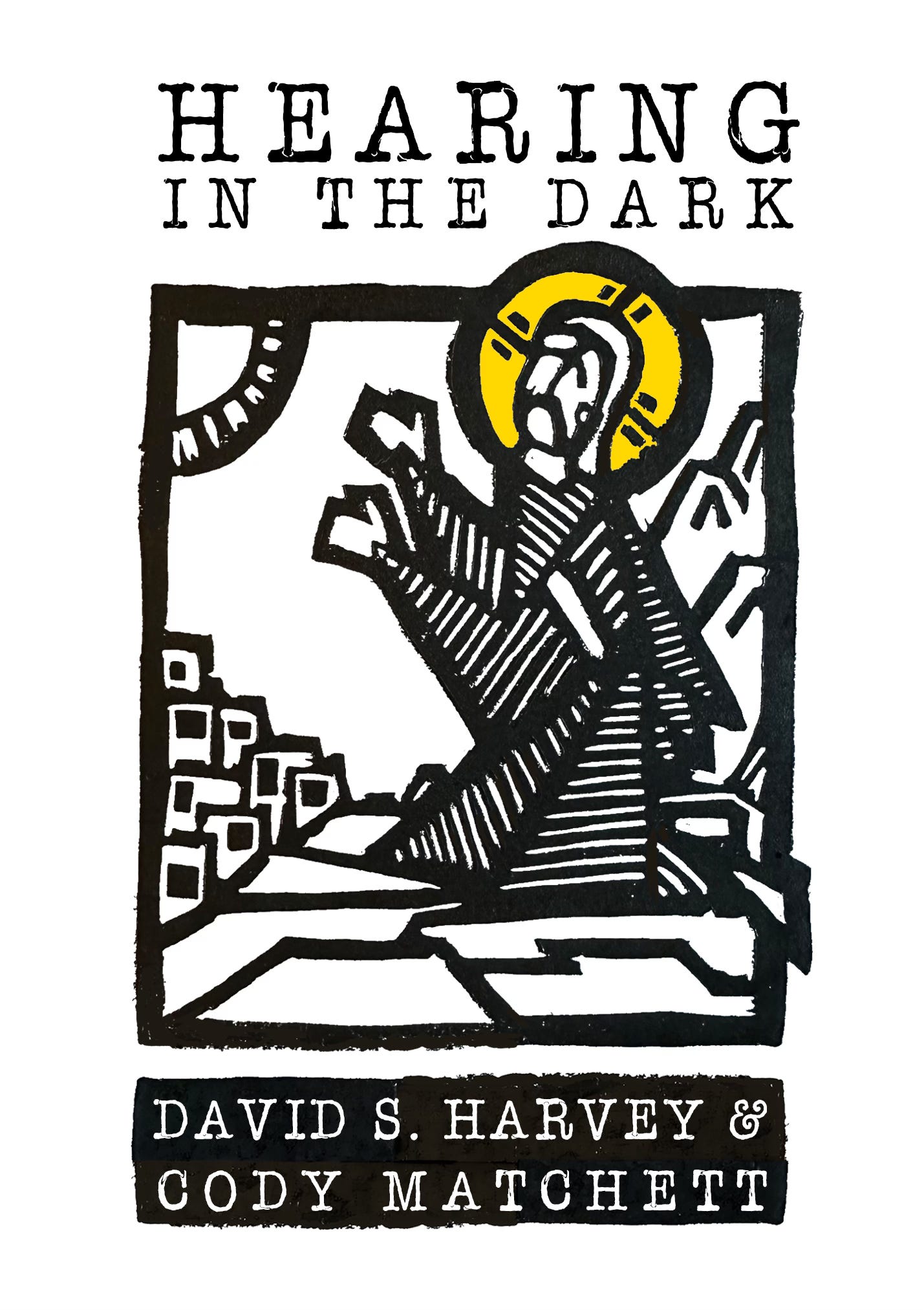
My new book, with Cody Matchett, Hearing in the Dark: Reflections on Christian Spiritual Formation is now out and available on Amazon. We’d love for you to pick up a copy and leave us a review. It’s a small book, easy to keep on a night stand for some bedtime reading, or drop in your bag to read during a quiet moment. We hope you like it.