
The Call does not Overwhelm
The supernatural spiritualizes rather than replaces the natural

St. John of the Cross, “the supernatural permeates and spiritualizes the natural order, without, for all that, depriving it of its rights and its riches.”
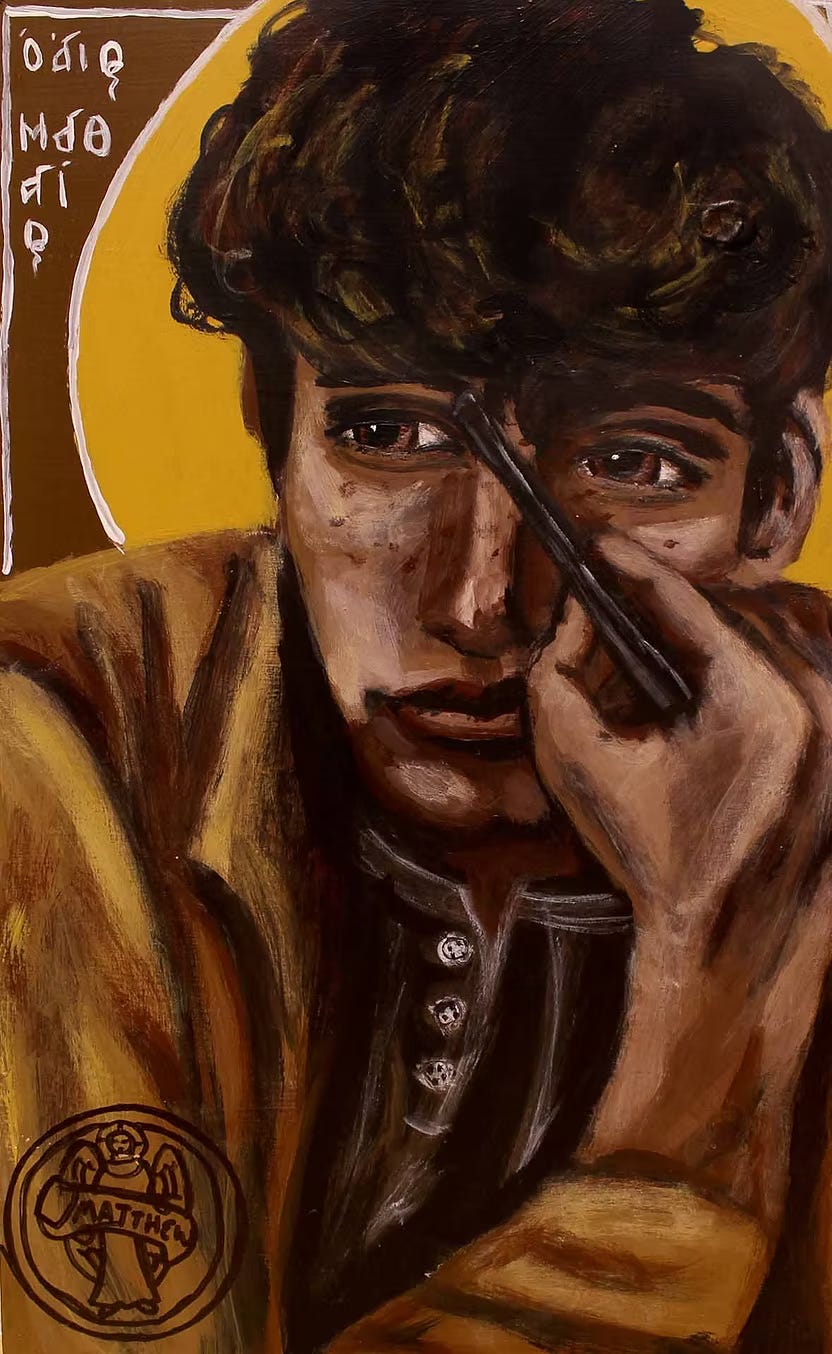
Ordinary time begins properly this weekend, and in “ordinary” fashion, the gospel texts will guide us through one of the gospel’s unfolding of Jesus’s public ministry. This year, because of the Easter date, the year begins with Proper 5 and we open our ordinary time with Matthew’s Gospel’s account of Jesus’s calling of Matthew, patron saint of bankers, tax and finance workers, and accountants.
I’ve been pondering how Matthew responds to Christ’s call. What is it in the human that draws us to respond to Christ? It strikes me that most of the “dramatizations” of the gospel accounts work from the premise that Jesus has something about himself that makes the first apostles leave everything and follow him. But I’ve been pondering what it might be in them that is “activated” by hearing the Word that is Christ say “follow” to them.
Is that Christ’s “super nature” overwhelms them and they have to follow? I think this is what we assume, because we assume that this is how God always works.
But what if Christ’s word brings alive and transfigures that which we were always created to be?
This thought drew me back to Henri De Lubac’s Brief Catechesis on Nature and Grace1 and his conversation on what it is that the supernatural does. Read this with this weekend’s texts in mind, and perhaps your own life too:
The supernatural, as we have shown and as we must keep repeating, is not a “supernature” with its own consistency and its own subsistence, something which would be superadded to human nature, to all its developments and to all that it creates (to all its acquired culture). Nor does it eliminate that nature. It neither disdains nor replaces it. It informs it, remolds it; if necessary it can exorcise it; …it transfigures it in all of its concepts and activities. As has been said with reference to St. John of the Cross, “the supernatural permeates and spiritualizes the natural order, without, for all that, depriving it of its rights and its riches.”2 The Word of God on coming into this world did not try to compete on the same level, as if he had been only one more element in this world, with all that humanity could offer, all that was true, just, beautiful, upright and praiseworthy in individual behavior or in the social life of men.3 He did not come like a ravaging power, devastating in his conquest men’s spontaneous religious sense or all the acquisitions of their moral culture; he came demanding total renewal. St. Augustine was faithful to his spirit when he explained in the City of God that the Roman virtues and the natural principle of virtue were awaiting their purification and their completion from the “true religion”.4
Notice how De Lubac smoothly rejects the notion of “religion” being a negative thing, to choose “faith” over “religion” is to fall victim of the trap that the supernatural never works within nature. Christ calls Matthew to follow him, but Matthew remains thoroughly himself, foibles and all, but now is also Christ’s.
This is true of me, you, the church, and our religion.
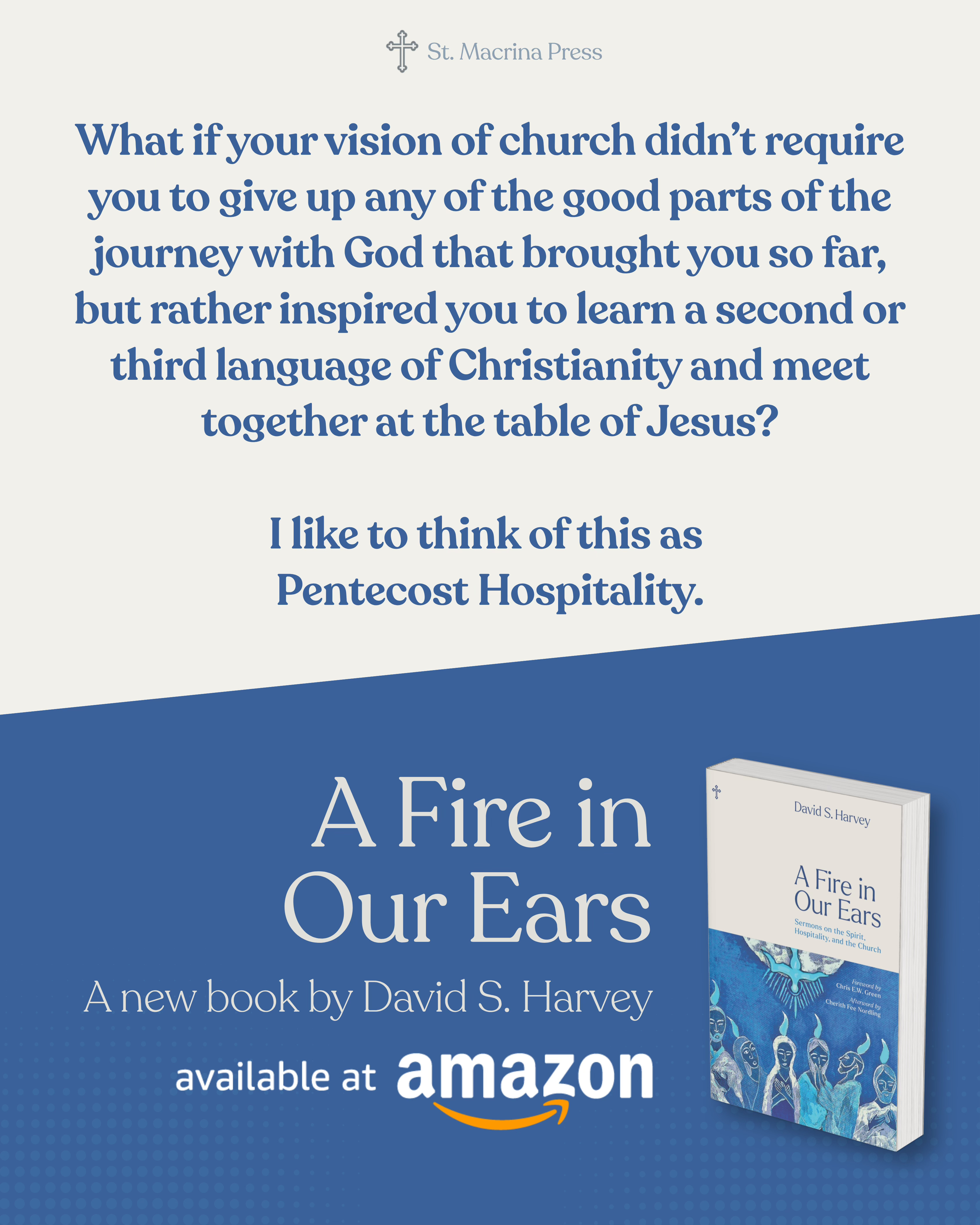
I really am excited to let you know that A Fire in Our Ears: Sermons on the Spirit, Hospitality, and the Church is now available to order from Amazon at any of their sites around the world. You will be familiar with much of the journey in the book, but I think it’s come together in a really beautiful book that will grace a coffee table well.
When you’re ready to get a copy, search it on Amazon, or use the following links:
Amazon USA: https://www.amazon.com/dp/B0GXZP42BP
Amazon Canada: https://www.amazon.ca/dp/B0GXZP42B
Amazon UK: https://www.amazon.co.uk/dp/B0GXZP42BP
Henri De Lubac, A Brief Catechesis on Nature and Grace, p.86.
Alex Ceslas Rzewuski, A travers l’invisible cristal: confessions d’un dominicain (Ploy, 1976), 384.
Philippians 4:8
St. Augustine, De Civitate Dei, bk 2.29