
Prayer Leaps the Gap
Jesus, John, and the Communion of Saints

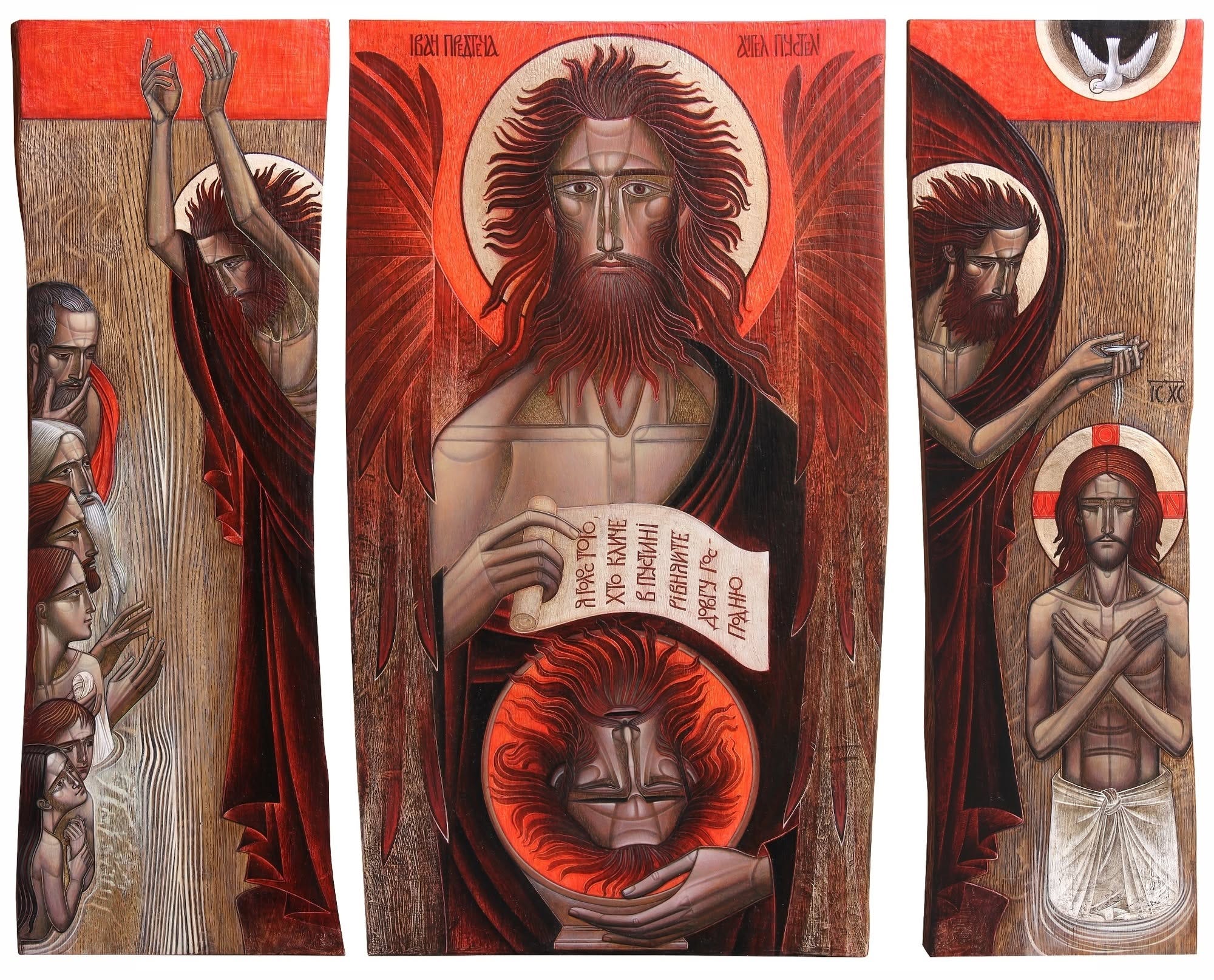
Our friend, Philemon of Gaza, reads the Gospel text for Proper 13 with context that our lectionary, perhaps unhelpfully, omits. Matthew 14:13-21, which tells the story of the Feeding of the 5,000, begins with an allusion to Jesus hearing something (“Now when he heard this.”). The omission restores the PG category of the Sunday Gospel by avoiding the account of the beheading of John the Baptist. In doing do, however, we can miss the emotional moment in which Jesus comes to this text, and, possibly, the real reason that the disciples want to chase the people away that evening.
The day begins with Jesus seeking a deserted place (14:13) and nears its close with the disciples pointing out that they are in a deserted place (14:15) so maybe it’s time to make space for some alone time, undoubtedly wanting a quiet moment for Jesus to grieve.
Philemon’s meditation doesn’t want to miss this background context. In doing so he offers a quite lovely reflection on the communion of prayer, both amongst friends living, saints with God, and the Trinity. Many of us don’t really reflect often on what we mean when we confess, “I believe in the communion of saints,” but I do wonder if we would do better to think of the Christian family as a worldwide community of God’s people, on earth and in heaven.
Here is Philemon’s reflection:
To be upheld in one’s life by another person’s prayer is an inexpressible grace. I have noticed this since being here. Since my arrival in the monastery, I know that the Chief Elder has been praying for me, as he does for each of us. I find from this that the bond of communion in prayer is very deep. United in prayer by the Holy Spirit, borne up by the prayers of the Son who intercedes for us (Romans 8:34),1 even when we are alone, each of us in our cell, our hearts are turned towards the Father together in prayer; this is very strong Trinitarian experience. Throughout the Baptist’s time in prison, Jesus was already united with the Father and the Holy Spirit, but into this Trinitarian bond there insinuated the prayers of another man, which gave it an extraordinary supplementary depth and power. And now this death upset it all. This was the end of a great stage in Jesus’ life, the end of a human fellowship at the heart of the Trinitarian love.
The death of the Baptist put an end to this stage but opened another, and it was also to enter this new stage that Jesus withdrew into solitude. What is new is that the Baptist would be present in a different way, present with the angels, the archangels and the multitude already near to the Father. The bond of love in the communion of prayer would now be strengthened by working still more in a communion in which the dead and the living take their place, all united in Trinitarian love. This sheds light on the fellowship I enjoy here, alone in my cell.2
Into Philemon’s own solitary moment he becomes aware of a fellowship in prayer that transcends his own emotions. How can Jesus be compassionate in such a tragic and emotional moment. Just as we can, Philemon seems to imply. In prayer.
My new book, with Cody Matchett, Hearing in the Dark: Reflections on Christian Spiritual Formation is now out and available on Amazon. We’d love for you to pick up a copy and leave us a review. It’s a small book, easy to keep on a night stand for some bedtime reading, or drop in your bag to read during a quiet moment. We hope you like it.
This was the New Testament reading for Proper 12. Read my homily from that week here.
Philemon of Gaza Meditates Matthew’s Gospel, p.167-168
I haven’t yet been able to source this, but earlier today, while studying for Sunday’s sermon, I stumbled upon this gem from Rahner:
“The great mistake of many people – among them, even pious persons – is to imagine that those whom death has taken, leave us. They do not leave us. They remain! Where are they? In darkness? Oh, no! It is we who are in darkness. We do not see them, but they see us. Their eyes, radiant with glory, are fixed upon our eyes full of tears. Oh, infinite consolation! Though invisible to us, our dead are not absent.
I have often reflected upon the surest comfort for those who mourn. It is this: a firm faith in the real and continual presence of our loved ones; it is the clear and penetrating conviction that death has not destroyed them, nor carried them away. They are not even absent, but living near to us, transfigured: having lost, in their glorious change, no delicacy of their soul, no tenderness of their hearts, nor especial preference in their affection. On the contrary, they have, in depth and fervour of devotion, grown larger a hundredfold. Death is, for the good, a translation into light, into power, into love. Those who on earth were only ordinary Christians become perfect… those who were good become sublime.”
—Karl Rahner
This is a beautiful reminder. Thank you 🙏🏼