
Grace Assumes Full Reality
Thoughts on Baptism

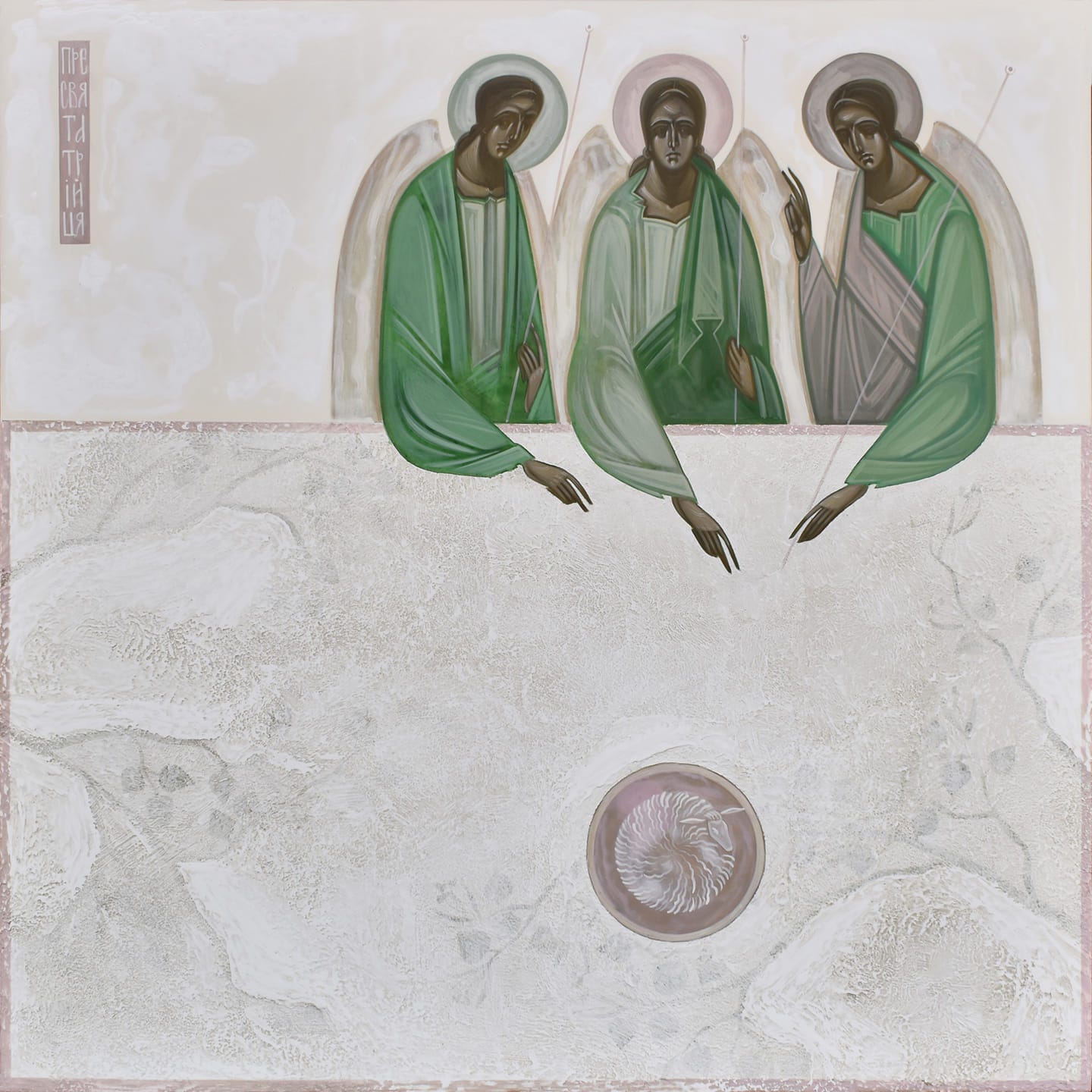
The New Testament epistle reading for Trinity Sunday offers us a well known trinitarian line from St. Paul:
The grace of the Lord Jesus Christ, the love of God, and the communion of the Holy Spirit be with all of you. (2 Corinthians 13:13)
Naturally the Trinitarian formula here, alongside the gospel reading for Sunday of Matthew 28:16-20, draws us to think about our baptisms.
The place of baptism in the church is often questioned. Do Christians really need to be baptized? This question is asked increasingly in both sacramental and free-church traditions alike. As such I note pastorally how increasing numbers of people are not baptized, replacing baptism with a prayer of salvation, or just their own intention of faith.
Notwithstanding the lack of biblical support for this — I often pointed out to my students that the New Testament does not know of the “unbaptized Christian” — I think the challenge is rooted in us often trying to decide what baptism is actually doing, where the agency lies, and, understandably, what not being baptized really means for someone who loves Jesus.
Even the Roman Catholic doctrines hold comfortably the idea that in advance of any plunging into water, a person is essentially “baptized of desire,” so what is really the purpose of doing the thing that Jesus told his disciples to go and do?
In a wonderful little essay on the subject, Karl Rahner speaks of water baptism in a beautifully deep but simple way as that in which God’s grace in us assumes full reality:
What happens when someone sincerely loves another person and, although for one reason or another he or she may not find it easy, addresses the decisive word of love to this other person? This word is a declaration and a decision about one’s love. Yet this love is realized in its full intensity and definitiveness through this word; the love would not be the same if it did not express itself in its disclosure and so translate itself into reality. To that extent we may consider this word, the sign of this love, as being also its cause, because this love renders itself real through the disclosure that is, at the same time, distinct from it.
Let us apply this to the baptism of those who are already justified. They bring to their baptism the grace of God that has already freely been accepted. But through the ceremony of baptism this very grace wants to make itself visible historically (in time and space, in the body) and socially (in the Church). And by becoming visible in this way it becomes present also in the bodily and social dimensions of the baptized person. Baptism is an effect of grace in such a way that through it this grace itself assumes full reality. And to that extent baptism is also the cause of grace. (The explanation mentioned above, is correct in itself: that baptism “increases sanctifying grace” in the person who is already justified before being baptized. Only it understands this “increase” almost as a quantitative addition, not as a self-realization of the same grace that is fully realized on account of the sacramental sign.) When we look at it this way, we understand what we mean when we say that the sacrament, as sign of grace, is the cause of grace. If we understand things correctly, sacramental sign and sacramental cause do not occur next to each other, but in each other.1
This draws me back to the two texts for this Sunday. In 2 Corinthians we see the trinitarian formula named alongside trinitarian actions: Grace, love, and fellowship. Things done to us and for us, in the name of God. Things we encounter in baptism. Conversely, in Matthew 28 we see humanity in its vulnerable display, a mixture of worship and doubt. Humans, loved by the Father, encounter the grace of the Son, and are drawn into the fellowship of the Holy Spirit, not by overcoming their doubts, but by allowing their baptism to fully realize the truth of the Trinity in them and for them.

My new book, with Cody Matchett, Hearing in the Dark: Reflections on Christian Spiritual Formation is now out and available on Amazon. We’d love for you to pick up a copy and leave us a review. It’s a small book, easy to keep on a night stand for some bedtime reading, or drop in your bag to read during a quiet moment. We hope you like it.
Karl Rahner, ‘Baptism and the Renewal of Baptism’, in Theological Investigations v.23, p.199-200.