
God is Ours
Is there a point to Pentecost?

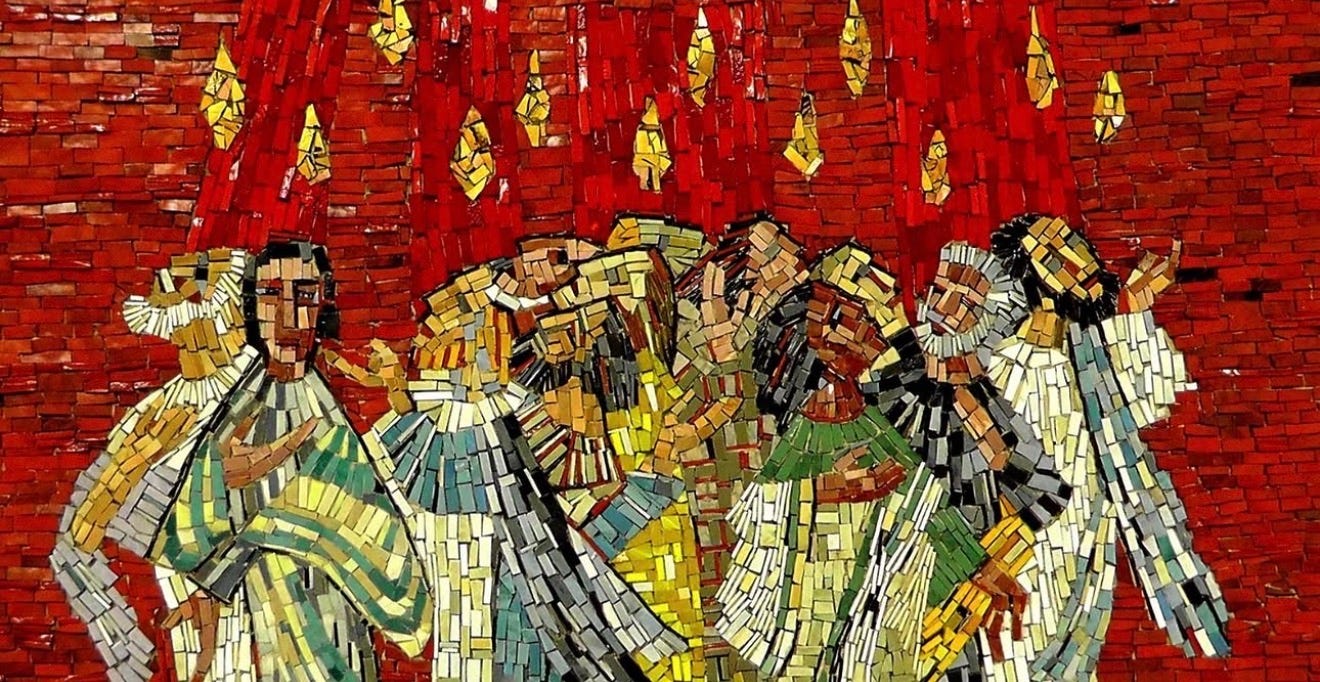
As a Pentecostal priest I’m always interested in how people talk about Pentecost. This interest undoubtedly grows in me after spending time at points in my adult life amongst pentecostals who believed we held the monopoly on the Holy Spirit.
I was once at a pentecostal event in a Cathedral where the well-known speaker questioned whether this was the first time the Holy Spirit had been in that building.
Really.
Of course there is a healthier Pentecostal too, those who believe the accounts of the Spirit in the Acts of the Apostles, where the Spirit has a tendency of showing up on the other side of the table from those who think they hold the monopoly. That’s the type of Pentecostal I am trying to be. To confess that the Spirit is unbounded, a wild goose, as the Celtic Christians say, and turns up in Catholic, Wesleyan, Anglican guises (amongst others).
As a British Pentecostal I should never forget that British Pentecostalism begins amongst Anglicans. As I said, this Spirit is a wild goose.
All this to say, it’s never a good thing to narrow your reading down to just your own people.
•
In a piece titled The Message of Pentecost the German Jesuit Priest, Karl Rahner, speaks of Pentecost in a way that we would all do well to listen to. I wanted to share some extracts.
He begins by noting that the pattern of Christ’s Passion, Resurrection, Ascension, and then Pentecost are all, essentially, one sequence of connected events:
All these events have but one goal: to redeem the world and the human beings in it, and to give God himself to this redeemed world.1
From this point, however, he then draws us close into the relational, personal nature of God in Pentecost and what it means for us:
That is why Pentecost is the fulfillment of Easter. The reason why the glowing love of the Father and of the Son has descended into our hearts is that the Father’s own Son has brought our humanity back into the Father’s light. The reason why one can live God’s own life in the Holy Spirit is that the Son of man died according to the flesh. The Holy Spirit of the eternal God has come. He is here: he lives in us, he sanctifies us, he strengthens us, he consoles us. He is the pledge of eternal life, the eamest of absolute triumph. The center of all reality, the innermost heart of all infinity, the love of the all-holy God has become our center, our heart. True and absolute reality now lives in our nothingness; the strength of God vitalizes our weakness: eternal life lives in mortal human beings.2
He spots something that I think is absent in lots of so-called contemporary pneumatology. We are generally “good” with the idea that the Spirit means that God is present to us, but notice what Rahner does next.
God is ours. He has not given us merely a gift, a gift created and finite like ourselves. No, he has given us his whole being without reserve: he has given us the clarity of his knowledge, the freedom of his love, and the bliss of his trinitarian life. He has given us himself. And his name is Holy Spirit. He is ours. He is in each heart that calls to him in humble faith. He is ours to such an extent that, strictly speaking, we can no longer say what the human being is if we omit the fact that God himself is the person’s possession. God is our God: that is the glad tidings of Pentecost.3
We can no longer speak of the human without acknowledging that God is the person’s possession. That’s the sort of world changing that we should be referring to when we talk about being “Pentecostal”. At some level it is the existential question — what does it mean that this God is our God? Rahner opines:
We must keep on asking, together with those who heard St. Peter’s Pentecost sermon, “Brethren, what shall we do?” (Acts 2:37). What shall we do, so that the Holy Spirit will be our portion, so that he will remain with us always, and continue to increase in us? Peter gave the answer to this question, and his answer is still valid for us: “Repent and be baptized every one of you in the name of Jesus Christ for the forgiveness of your sins; and you will receive the gift of the Holy Spirit” (Acts 2:38). The order of these two requisites may be reversed for us who have already been baptized; the demand itself still remains the same: baptism and, every day, a new conversion.
We are baptized. This is the first thing that God has done for us, and this assures us that he has willed to give us his Holy Spirit. Like the wind, the Spirit of God blows where he will, and in his loving patience he roams, no doubt, through all the streets of the world, in order there to touch us. And, in the omnipotence of his grace, he may find many to touch. Yet this grace always strives to bring such persons home to its kingdom, the church, and to incorporate them into the mystical body of Christ, whose soul is that same Spirit…
We are baptized. God has touched us, not merely by ideas and theories, not merely in pious moods and feelings, but by his own personal, incarnate action, which he works in us in baptism through his ordained servant. This is our consolation and our conviction: that God has already freely and openly spoken to us and poured the Spirit of his life into our hearts from the first days of our [Baptised] life. 4
I truly hope these sorts of pentecostal ideas make their way into sermons this weekend. This is a good God, a pentecost God, he is our God. What Rahner is naming, importantly, is that Pentecost then draws us into a solidity of faith that God is with us, regardless of how things “feel”. He’s not offering us an experiential pentecost where we “feel God” in the dark moments, but an invitation to trust that, in the Spirit, we know God is with us in those dark moments, regardless of what we feel. We are baptized, we have the Spirit. Let us not seek a God who has to prove himself to us:
We must not interpret our experience of life falsely, and think that the Spirit or God has become distant and weak. Rather, we must learn from these experiences that we are always seeking him in the wrong place and in the wrong way, that we are always ready to confuse him with something else. If we reflect in this way, then we shall perceive over and over again with trembling joy that he is there, that he is with us: the Spirit of faith in darkness, the Spirit of freedom in obedience, the Spirit of joy in tears, the Spirit or eternal life in the midst or death. Then we are filled, in all the insignificance and silence or this world, in all the sober realism or everyday life, with the holy conviction that he is there, he is with us. He prays with unspeakable groanings in each one’s heart. He consoles and strengthens, he heals and helps, he gives the certainty or eternal life.5
Perhaps all we need to pray this weekend is simply, Veni, Sancte Spiritus.6
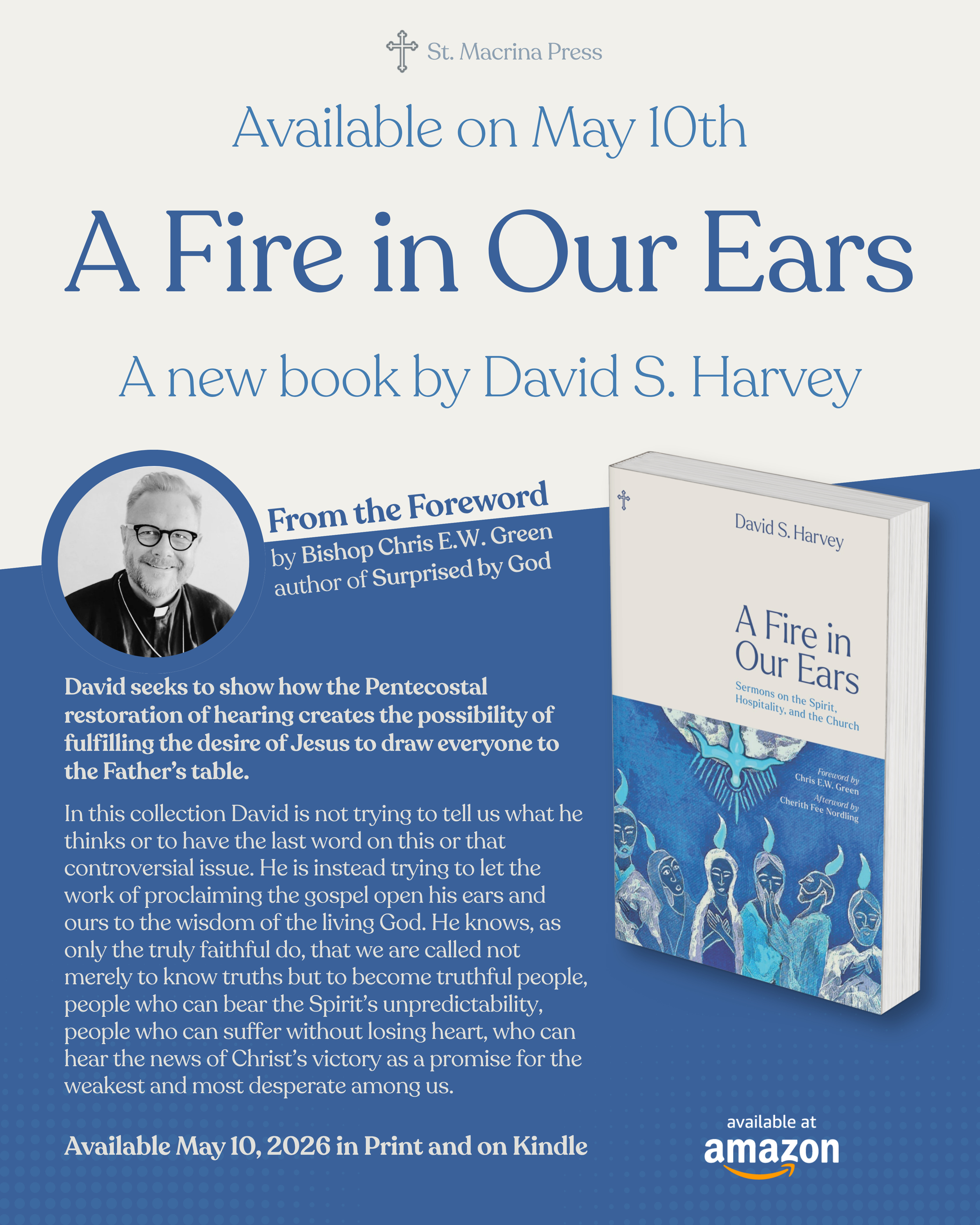
I really am excited to let you know that A Fire in Our Ears: Sermons on the Spirit, Hospitality, and the Church is now available to order from Amazon at any of their sites around the world. You will be familiar with much of the journey in the book, but I think it’s come together in a really beautiful book that will grace a coffee table well.
When you’re ready to get a copy, search it on Amazon, or use the following links:
Amazon USA: https://www.amazon.com/dp/B0GXZP42BP
Amazon Canada: https://www.amazon.ca/dp/B0GXZP42B
Amazon UK: https://www.amazon.co.uk/dp/B0GXZP42BP
Karl Rahner, The Great Church Year, p.210.
ibid., p.211.
ibid.
ibid. p.212.
ibid. p.214.
Latin: Come, Holy Spirit.
I'm a cradle Lutheran, but according to this lovely piece of writing, my theology is decidedly pentecostal. Grateful the divine pneumos that inspires our pastor's preaching.