
Divine Defiance
MacDonald on the Transfiguration

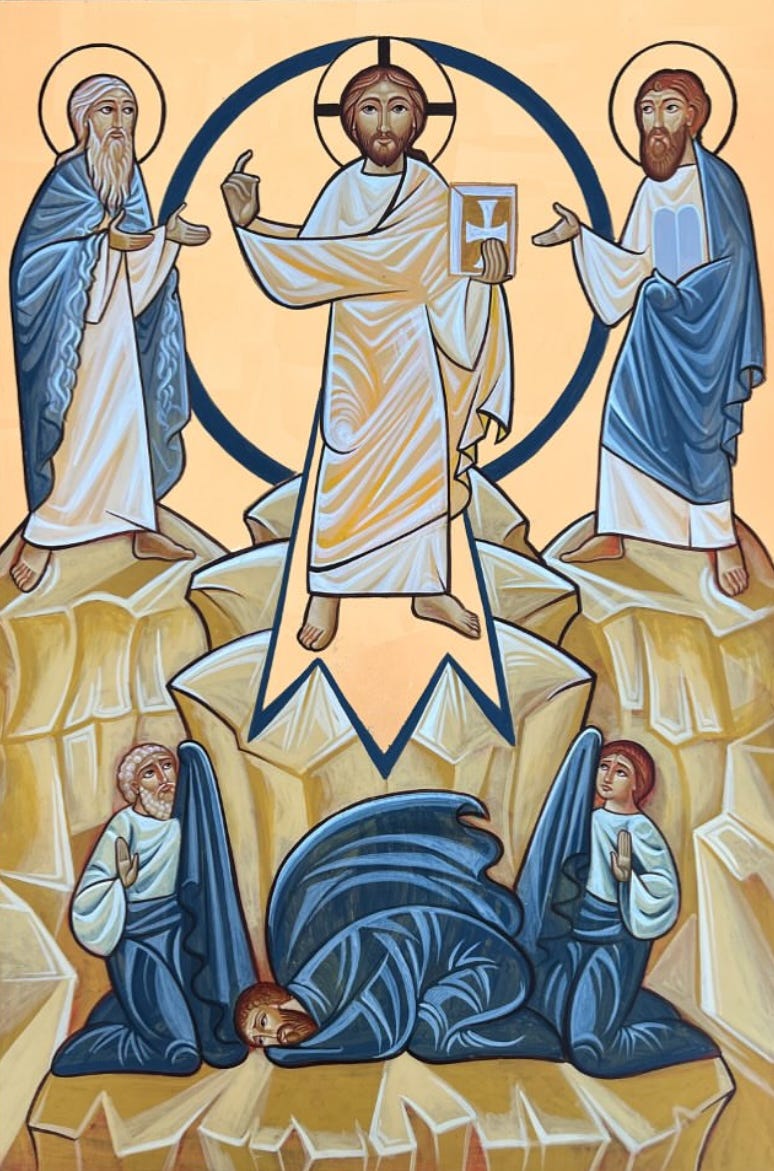
This coming weekend brings the Feast of the Transfiguration in the Revised Common Lectionary readings. Matthew 17:1-9 introduces the story that bridges the gap between Epiphany and Lent for the church.
George MacDonald notes, in his meditation on all three synoptic accounts of the story, that the conversation Jesus has with his Father is significant to understanding the event. It’s a beautiful notion that a conversation about his death leads to a shining glory. His idea drew me to think about how Jesus refers to his crucifixion as his glory in John’s gospel (chapter 12) and here in Luke a conversation about his death leads to his “being changed” (Metamorphoō).
MacDonald’s thoughts are wonderful. The meditation comes from his collection Miracles of the Lord. Importantly, in the essays MacDonald reads Jesus’s miraculous moments as intentional revelations of God’s character. The Transfiguration is an example. Notice how he thinks that what we see in Christ’s Transfiguration is indicative of what happens when we give our sorrow to Christ:
St Luke says that "the fashion of his countenance was altered, and his raiment was white and glistering." St Matthew says, "His face did shine as the sun, and his raiment was white as the light." St Mark says, "His raiment became shining, exceeding white as snow, so as no fuller on earth can white them." St Luke is alone in telling us that it was while he prayed that this change passed upon him. He became outwardly glorious from inward communion with his Father. But we shall not attain to the might of the meaning, if we do not see what was the more immediate subject of his prayer. It is, I think, indicated in the fact, also recorded by St Luke, that the talk of his heavenly visitors was "of his decease which he should accomplish at Jerusalem." Associate with this the fact that his talk with his disciples, as they came down the mountain, pointed in the same direction, and that all open report of the vision was to be withheld until he should have risen from the dead, and it will appear most likely that the master, oppressed with the thought of that which now drew very nigh, sought the comfort and sympathy of his Father, praying in the prospect of his decease. Let us observe then how, in heaving off the weight of this awful shadow by prayer, he did not grow calm and resigned alone, if he were ever other than such, but his faith broke forth so triumphant over the fear, that it shone from him in physical light. Every cloud of sorrow or dread, touched with such a power of illumination, is itself changed into a glory. The radiance goes hand in hand with the coming decay and the three days' victory of death. It is as a foretaste of his resurrection, a putting on of his new glorified body for a moment while he was yet in the old body and the awful shadow yet between. It may be to something like this as taking place in other men that the apostle refers when he says: "We shall not all sleep, but we shall all be changed." That coming death was to be but as the overshadowing cloud, from which the glory should break anew and for ever. The transfiguration then was the divine defiance of the coming darkness.1
He continues:
The outer man shone with the delight of the inner man--for his Father was with him--so that even his garments shared in the glory. Such is what the presence of the Father will do for every man. May I not add that the shining of the garments is a type of the glorification of everything human when brought into its true relations by and with the present God?
Just one more time because it’s wonderful:
The transfiguration then was the divine defiance of the coming darkness.
If you’d like to join as a paid subscriber and support my writing, then I’d deeply appreciate it. I use that support to fund a book project rather than create a paywall on new posts. Not everyone wants to take on a paid subscription though, I get that, but sometimes we all like the chance to say “thanks”. So there’s also a “buy me a book” option if you’d prefer.
George MacDonald, The Transfiguration
Wow! Now that quote that needed to be quoted!